The Yugo: More Than Just a Punchline?
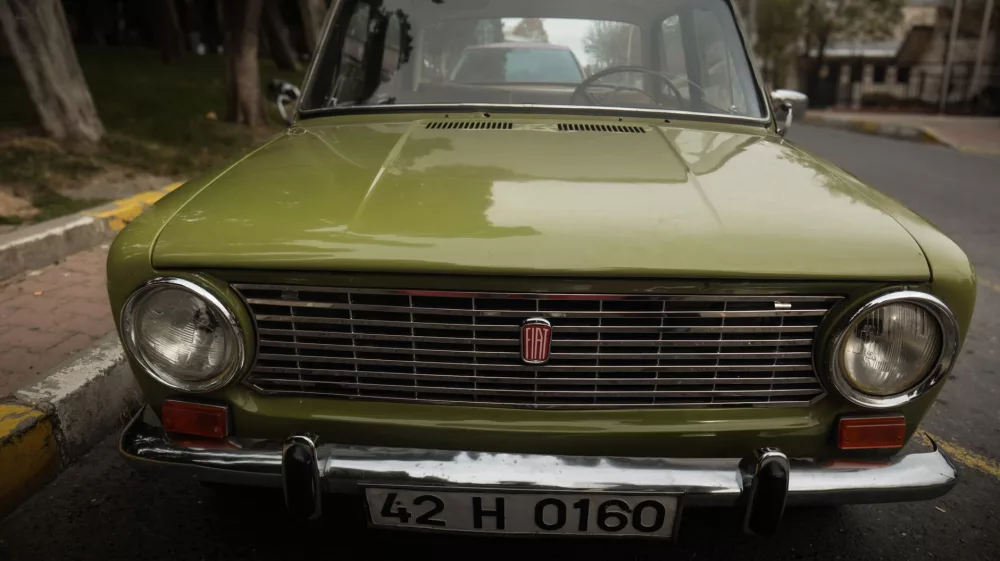
Let's be honest, when you hear the word "Yugo," what's the first thing that pops into your head? Probably a joke, right? Maybe a mental image of a lemon on wheels, or some quip about its unreliability. For many, it's just a punchline, a shorthand for automotive failure. But I gotta tell you, there's so much more to this little car than its comedic reputation suggests. It’s a fascinating slice of automotive history, a cultural touchstone, and an object lesson in international commerce, all rolled into one surprisingly compact, often frustrating, package.
The Birth of a 'People's Car'
To truly understand the Yugo, we need to rewind a bit and look at its origins in Yugoslavia. This wasn't some evil, monolithic communist state; it was a non-aligned socialist republic with its own unique economic system. The Zastava Automobiles factory, located in Kragujevac, had a long history of car manufacturing, primarily under license from Fiat. They were building cars like the Zastava 750 (a licensed Fiat 600) and later the Zastava 101 (a licensed Fiat 128), which were sturdy, affordable, and perfectly suited for the local market.
The idea behind the Yugo, or Zastava Koral as it was known domestically, was to create an even more modern and accessible car. It wasn't just some slapdash project; this was Yugoslavia's homegrown effort to give its citizens an affordable, compact, and relatively stylish vehicle for the 1980s. Designed in cooperation with Fiat, it even had some cool features for the time, like an independent suspension system. For the average Yugoslavian family, this car represented freedom, mobility, and a step up in life. It was their car, and it was a source of pride.
The American Dream (or Nightmare?)
Now, here's where things get wild. Enter Malcolm Bricklin, the automotive entrepreneur who previously brought Subarus and even the quirky Bricklin SV-1 to the US. Bricklin saw an opportunity: America needed a super cheap car, and the Yugo was super cheap. In 1985, the Yugo GV (Great Value) hit American shores with a staggering price tag of just $3,990. Can you even imagine a new car costing that little today?
Initially, people went nuts for it. I mean, we're talking about a time when interest rates were high, and new cars were getting expensive. For young people, for a second family car, or just for anyone on a tight budget, the Yugo was an absolute no-brainer on paper. It promised basic, no-frills transportation at a price point that was simply unbeatable. Dealers couldn't keep them on the lots; there was genuine excitement and demand.
But the honeymoon, as they say, was short-lived. Very, very short-lived.
Engineering, Design, and the Descent into Disrepute
The Yugo was based on Fiat mechanicals, specifically those from the Fiat 127, but with some Zastava modifications. It typically came with a 1.1-liter four-cylinder engine, putting out a modest 55 horsepower. Sounds okay for a small car, right? The problem wasn't necessarily the design itself, which was a pretty standard hatchback for the era, but rather the execution.
Quality control, that's where things really fell apart. I don't think I can stress this enough. When Zastava started shipping cars to the US, they were under immense pressure to produce them quickly and cheaply. What arrived often reflected this rush: parts that weren't quite fitted right, electrical systems that were, let's just say, 'temperamental,' and a general sense of being built to the absolute lowest common denominator. Anecdotes from the time are legendary: dashboards that warped in the sun, switches that snapped off, engines that wouldn't start in cold weather, and transmission issues galore. One friend of mine remembers his dad's Yugo needing constant repairs; it was a running joke in their family.
And let's not forget the infamous 1989 incident where a Yugo was blown off the Mackinac Bridge in Michigan due to high winds. While tragic and largely due to extreme weather, it solidified the car's image as flimsy and unsafe in the public consciousness. You can imagine the field day late-night comedians had with that one!
The Reputation Problem and Its Echoes
The jokes started almost immediately, and they were relentless. "What do you call a Yugo with a flat tire? A stolen hubcap." "How do you double the value of a Yugo? Fill it with gas." They were everywhere, and they stuck. The Yugo became a shorthand for cheap, unreliable, and just plain bad. It didn't help that many American drivers were used to a certain level of comfort, performance, and reliability that the Yugo simply couldn't deliver.
But here's a thought: was it really the worst car ever made? When we consider the context, maybe not quite. For its price point, it offered transportation. In Yugoslavia and other Eastern European countries, it was a perfectly acceptable car for daily use, especially if you were handy with a wrench. The simple mechanicals meant repairs, while frequent, were often straightforward and inexpensive to fix. Parts were abundant. It got you from A to B, and that was its primary function.
The End of an Era
The Yugo's fate in the US was sealed by its reputation, but its ultimate demise globally was tied to something far more tragic: the breakup of Yugoslavia and the ensuing wars in the 1990s. The factory at Kragujevac faced significant challenges, including economic sanctions, bombing during the Kosovo War in 1999, and a general collapse of the market it served. Production dwindled, and the quality, if anything, became even more inconsistent. The last Yugo rolled off the assembly line in November 2008, bringing to an end a curious chapter in automotive history.
A Complex Legacy
So, where does that leave the Yugo today? It's a complicated legacy, I think. On one hand, it remains a symbol of failure for many in the West, an emblem of an ambitious project that just didn't work out. It's often cited in "worst cars ever" lists, and the jokes persist.
However, for a small but passionate group of enthusiasts, particularly those who remember its initial promise or appreciate its unique place in history, the Yugo holds a certain charm. You'll find Yugo owner clubs, people restoring them, and even some trying to improve them with modern components. For them, it's not just a bad car; it's a quirky, underdog story. It represents a different time, a different economic model, and a period of genuine optimism in a country that would soon face immense strife. It was cheap, yes, but it allowed countless people to experience car ownership when they otherwise couldn't. And that, in itself, is something to acknowledge.
For me, the Yugo is a powerful reminder that history is rarely black and white. It's a car that was simultaneously a dream and a disappointment, a source of pride and a target of ridicule. It’s a testament to the complexities of international trade, the challenges of quality control, and the enduring human desire for affordable personal mobility. Maybe it wasn't a great car, but it certainly made its mark, and that's something worth thinking about, don't you agree?
Editorial Team
Contributor and staff analyst writing detailed analyses, guides, and coverage on technology, strategy, and modern digital ecosystems.